Fabric creasing is a common challenge in textile dyeing, especially when processing materials that are sensitive to mechanical pressure, uneven circulation, or prolonged compression. Crease marks can affect the appearance of finished fabrics and may require additional finishing processes. In some cases, they can even result in rejected batches and increased production costs.
As textile manufacturers look for ways to reduce water and energy consumption, ultra-low liquor ratio dyeing machines have become an increasingly attractive option. However, using less dye liquor does not automatically guarantee better fabric quality. The machine must also provide stable fabric circulation and suitable operating conditions throughout the dyeing process.
An ultra-low liquor ratio dyeing machine operates with a smaller volume of dye liquor relative to the fabric load. This reduces the amount of water that needs to be heated and can help lower the consumption of dyes and auxiliary chemicals. At such low liquor ratios, however, machine design and fabric handling become particularly important. The chamber structure, circulation system, loading capacity, and process settings all influence how the fabric moves during dyeing. Keeping the fabric moving smoothly, without excessive folding or compression, is essential to reducing creasing risks.
Fabric creasing usually occurs when material is repeatedly folded, compressed, or subjected to uneven tension during processing. One common cause is excessive fabric accumulation inside the main chamber. When too much fabric gathers in one area, prolonged pressure can develop between layers, leaving visible marks on the material. The risk varies with fabric weight, thickness, construction, and elasticity. Lightweight fabrics and materials with delicate surfaces often require more careful handling.
Uneven fabric circulation can also contribute to creasing. If the fabric does not move smoothly through the machine, certain sections may travel at different speeds or remain compressed for too long. This can lead to localized folding, twisting, and uneven tension. Incorrect loading quantities and unsuitable operating parameters may make the problem worse.
For this reason, reducing fabric creasing requires more than adjusting the liquor ratio. The machine must be designed to handle the fabric properly, while circulation speed, loading conditions, and dyeing parameters need to be matched to the material being processed.
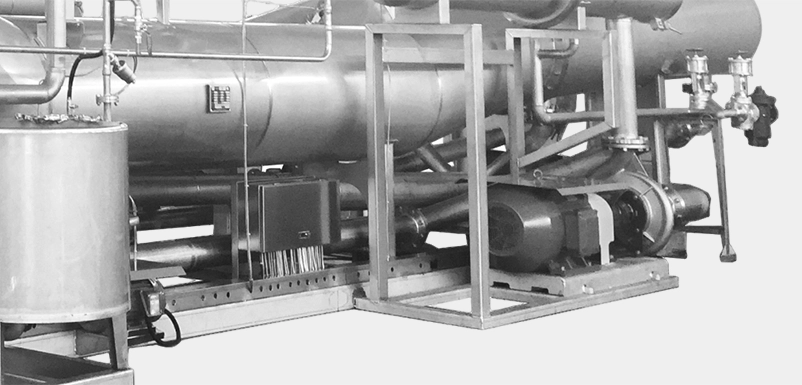
The main chamber plays an important role in determining how fabric moves during dyeing. If its internal structure does not support smooth fabric movement, material may accumulate in certain areas and remain under pressure for extended periods. A stepped main barrel offers a different approach by influencing how fabric enters, settles, and moves through the chamber.
Yadong's MK Ultra-Low Liquor Flow Dyeing Machine features a specially designed stepped main barrel. Fabric enters the main chamber from the rear section and moves in a stacking and creeping pattern. This arrangement is intended to improve fabric movement and reduce prolonged compression, helping lower the risk of crease formation.
Rather than relying solely on a lower liquor ratio, this design addresses one of the mechanical factors behind fabric creasing. For textile mills processing different fabric types, a chamber structure that supports consistent fabric movement can make a practical difference to production quality.
Fabric circulation affects both dyeing performance and the physical condition of the material. A well-designed circulation system should keep fabric moving continuously while ensuring sufficient contact with the dye liquor. Poor circulation can cause fabric to become tangled, folded, or unevenly distributed inside the machine, increasing the likelihood of crease marks and inconsistent dyeing results.
Several components work together to maintain stable circulation, including the main pump, nozzle system, fabric speed, and chamber design. Simply increasing circulation speed does not necessarily improve fabric handling. The settings must be appropriate for the fabric's weight, construction, and processing requirements.
Yadong's MK series offers a fabric running speed of 150–600 m/min, allowing operators to adjust operating conditions to different production requirements. The actual speed should be selected according to fabric characteristics and verified through process trials to achieve a suitable balance between circulation stability, dyeing uniformity, and fabric protection.
Temperature control is another important consideration in maintaining consistent dyeing quality. Different fibers and dye systems require specific heating, holding, and cooling conditions. An unsuitable temperature profile can affect dye uptake, color consistency, and fabric behavior during processing. In high-temperature dyeing applications, accurate temperature and pressure control are particularly important.
When evaluating a dyeing machine, buyers should look beyond its maximum operating temperature. They should also consider whether the equipment can provide controlled heating and cooling, accurate chemical dosing, and repeatable process settings.
Depending on production requirements, optional configurations such as proportional heating and cooling devices, proportional dosing systems, and pH control can help operators manage key process variables. Although these functions do not directly eliminate creasing, they contribute to more consistent dyeing conditions and better process control.
Different fabrics respond differently to mechanical movement, tension, and temperature. Polyester, T/R, T/C, cotton, polyester-cotton blends, and rayon all have specific processing characteristics. Their behavior during dyeing also depends on fabric weight, construction, elasticity, and finishing requirements.
Lightweight fabrics, for example, may be more susceptible to folding and surface marks, while heavier materials place greater demands on the machine's loading capacity and circulation system. Blended fabrics may also require carefully adjusted dyeing conditions to achieve consistent color development across different fiber components.
Yadong's MK model is designed for processing polyester, T/R, T/C, cotton, polyester-cotton blends, and rayon fabrics. Its applications also include fabric untwisting, preshrinking, and reduction processing.
When selecting a machine, textile manufacturers should assess the actual fabric specifications rather than relying on fiber names alone. Fabric width, weight per square meter, stretch properties, batch size, and dyeing recipes all influence equipment selection and operating conditions.
Even with a suitable machine structure, correct operating practices remain essential. Fabric loading should be kept within the machine's recommended capacity. Overloading can restrict fabric movement and increase mechanical pressure, while inappropriate loading conditions may affect circulation stability and production efficiency. Operators should also monitor fabric movement during processing and check for abnormal twisting, entanglement, or accumulation.
Circulation speed should be adjusted to suit the fabric being processed. Increasing fabric speed without considering material construction may introduce unnecessary mechanical stress. The relationship between fabric movement, pump performance, and dye liquor circulation should be evaluated when developing the dyeing process.
Temperature and chemical dosing programs also need to match the requirements of the fiber and dye system. Consistent heating and cooling, appropriate chemical addition, and stable pH conditions help maintain repeatable dyeing results. Regular inspection of pumps, nozzles, and other circulation components is equally important for reliable machine operation.
For textile mills aiming to reduce water and energy consumption, the liquor ratio should always be considered alongside fabric quality. A lower liquor ratio reduces the volume of dye liquor required, but actual resource savings also depend on loading conditions, washing requirements, dyeing recipes, and overall process efficiency. The best operating conditions are those that balance resource consumption with dyeing uniformity, fabric appearance, and production stability.
When comparing ultra-low liquor ratio dyeing machines, buyers should look beyond the advertised liquor ratio. The main chamber structure, fabric circulation system, processing capacity, operating temperature and pressure, and available control options all influence whether a machine is suitable for a particular textile mill.
Buyers should first confirm that the equipment can handle their regular fabric types and batch sizes. For materials that are particularly sensitive to creasing, discussing fabric handling methods and conducting dyeing trials with the manufacturer can help determine whether the machine is suitable for the intended application.
Optional configurations are another factor worth considering. Water and steam flowmeters can help monitor resource consumption, while proportional heating and cooling devices and dosing systems provide greater control over the dyeing process. A pH control system and high-temperature washing system may also be useful for specific production requirements. Choosing the right configuration helps manufacturers avoid unnecessary investment while ensuring the machine meets their actual processing needs.
Yadong's MK series is available in three standard configurations: MK-1-250-P, MK-2-500-P, and MK-4-1000-P, with stated batch capacities of 180–300 kg, 360–600 kg, and 720–1,200 kg, respectively. All three models have a maximum operating temperature of 140°C, a maximum operating pressure of 4 kg/cm², and a fabric running speed range of 150–600 m/min. The liquor ratio can reach 1:4–6 and is adjustable according to actual operating conditions.
These specifications give textile manufacturers a starting point for comparing machine capacity and matching equipment to their production requirements.
Zhejiang Yadong Machinery Co., Ltd. specializes in textile dyeing and finishing machinery, providing equipment for manufacturers seeking efficient and reliable fabric processing solutions. Its MK Ultra-Low Liquor Flow Dyeing Machine combines a stepped main barrel structure with low liquor ratio technology to address several important production requirements, including fabric handling, resource consumption, and process efficiency.
With an adjustable liquor ratio of 1:4–6, multiple capacity configurations, and optional process control systems, the MK series offers different solutions for textile mills with varying production needs. Its application range covers polyester, blended fabrics, cotton, and rayon, making it suitable for a variety of fabric dyeing operations.
For manufacturers looking to improve dyeing consistency while managing water and energy consumption, the relationship between machine structure, fabric circulation, and process control deserves careful attention. Yadong's MK series provides an equipment option worth considering when evaluating these production requirements.
No. An ultra-low liquor ratio dyeing machine can help reduce the risk of creasing through suitable chamber design and stable fabric circulation, but it cannot guarantee crease-free results in every application. Fabric properties, loading conditions, mechanical pressure, and process parameters also affect the final result.
A stepped main barrel is designed to guide fabric into the main chamber in a controlled stacking and creeping movement. This helps reduce prolonged fabric compression and supports more continuous fabric movement during dyeing.
Not necessarily. A lower liquor ratio can reduce water and chemical consumption, but dyeing quality also depends on dye distribution, circulation stability, temperature control, fabric characteristics, and the selected dyeing recipe.
The MK model is designed for polyester, T/R, T/C, cotton, polyester-cotton blends, and rayon fabrics. Actual suitability should be confirmed according to fabric construction and processing requirements.
The MK series can achieve a liquor ratio of 1:4–6, adjustable according to actual operating conditions. The appropriate setting depends on fabric loading and the requirements of the dyeing process.
Buyers should evaluate machine capacity, chamber structure, fabric circulation, pump performance, operating temperature and pressure, process control options, and compatibility with their regular fabric types. Conducting fabric trials before finalizing equipment specifications is also recommended.
Reducing fabric creasing in low liquor ratio dyeing requires more than simply using less dye liquor. Machine structure, fabric circulation, mechanical handling, and process control all influence the final fabric condition.
For textile manufacturers looking to improve production efficiency while managing water and energy consumption, choosing equipment with suitable fabric-handling capabilities is an important investment decision. With its stepped main barrel design, adjustable 1:4–6 liquor ratio, and multiple capacity options, Yadong's MK Ultra-Low Liquor Flow Dyeing Machine offers a practical solution for a range of textile dyeing applications.