Product Categories
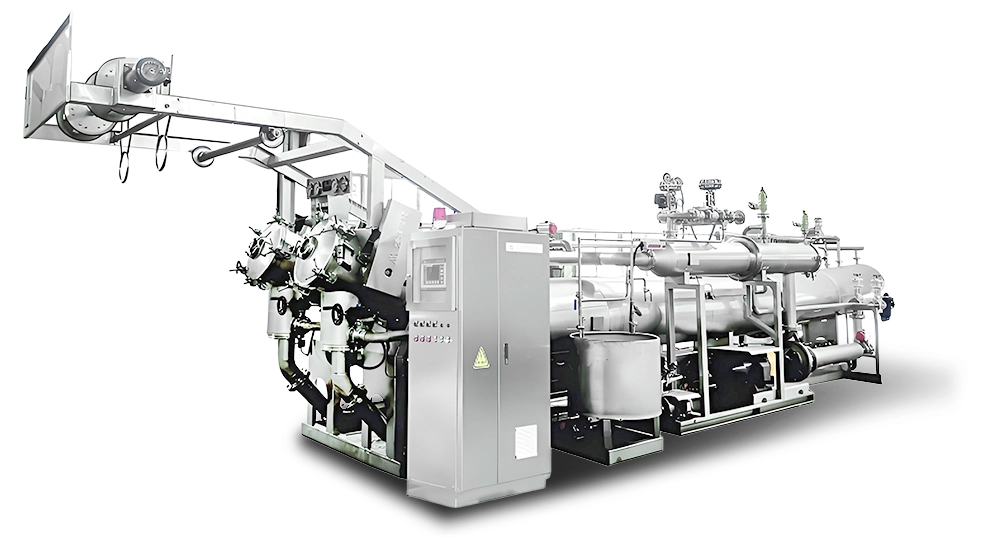
The Main Purpose
Dyeing, Untwisted, Preshrinking, Reduction and other ultra-low liquor ratio diverse processing.
Applicable Cloth Types
The most of woven and warp knit fabrics; some of knitting. Polyester, T/R, T/C, Nylon, Rayon, Tencel, Filament......Dyeing and processing of fabrics.
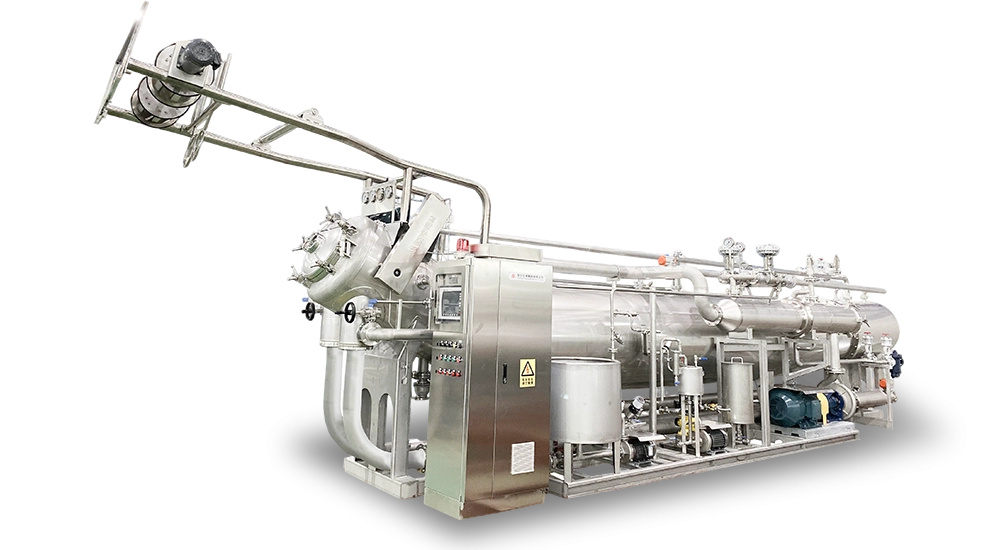
The Main Purpose
Dyeing, Untwisted, Preshrinking, Reduction and other ultra-low liquor ratio diverse processing.
Applicable Cloth Types
Polyester, Nylon/Spandex, Polyester/Spandex, Polyester/Cotton, Polyester-viscose, Plush,Home Textiles……Dyeing process of such tissue fabric.
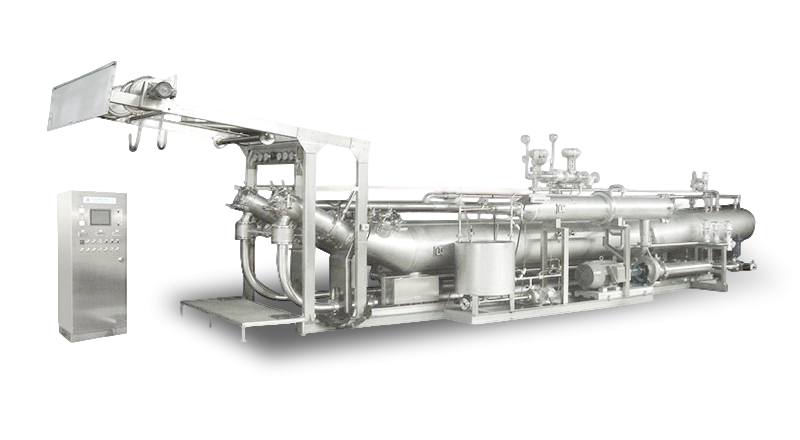
The Main Purpose
Dyeing, Untwisted, Preshrinking, Weight Reduction and other ultra-low liquor ratio diverse processing.
Applicable Cloth Types
The most of woven and warp knit fabrics; some of knitting. Polyester, T/R, T/C, Nylon, Rayon, Tencel, Filament......Dyeing and processing of fabrics.
The Main Purpose
Dyeing, Desizing, Unoil, Reduction and other ultra-low liquor ratio diverse processing.
Applicable Cloth Types
Polyester, Polyester/Cotton, Polyester-viscose, Cotton/Spandex, Cotton……Dyeing process of such tissue fabric.
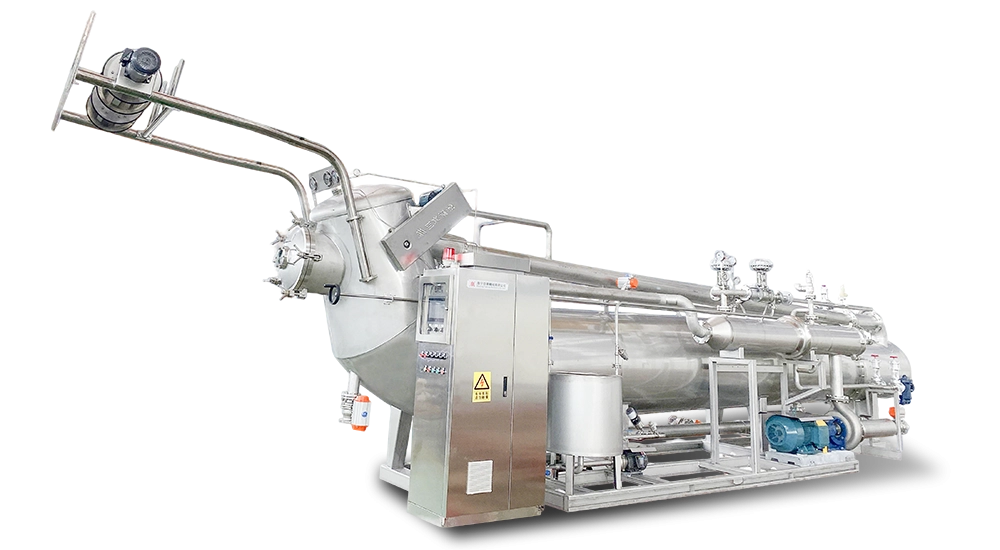
Zhejiang Yadong Machinery Co., Ltd. is a professional manufacturer of high-performance textile dyeing equipment based in Haining City, Zhejiang, China. With decades of engineering experience and a focus on precision manufacturing, Yadong has developed a complete series of high temperature and high pressure liquid flow dyeing machines designed to meet the diverse demands of modern fabric dyeing operations. This product category covers four specialized models — SK, SP, SF, and HP — each engineered for distinct fabric types and processing requirements, all operating under ultra-low liquor ratio conditions to improve efficiency and reduce resource consumption.
An HTHP (High Temperature High Pressure) liquid dyeing machine is a closed-vessel jet dyeing system in which fabric circulates continuously through a dye liquor under elevated temperature and pressure conditions. The working principle relies on a high-capacity main pump to generate a consistent liquid flow that drives the fabric through the nozzle system at controlled speed. Operating at a maximum temperature of 140°C and a maximum pressure of up to 4 kg/cm², this type of machine can penetrate synthetic and blended fibers deeply and uniformly, ensuring excellent color fastness and levelness. The ultra-low liquor ratio design significantly reduces the volume of water and chemicals required per kilogram of fabric processed, which translates directly into lower energy consumption, faster heating and cooling cycles, and reduced wastewater discharge compared to conventional dyeing vessels.
The nozzle system is central to machine performance. Large-flow nozzles maintain high dye circulation rates while minimizing mechanical tension on the fabric. The fabric speed is adjustable across a range of 150 to 600 m/min depending on the model, allowing operators to fine-tune the process according to the weight, weave structure, and surface sensitivity of each material. The guide wheel speed is automatically synchronized with the fabric running speed, which reduces the risk of abrasion, winding, and surface defects during long production runs.
The Model SK woven fabric dyeing machine is the flagship model in the HTHP series, designed primarily for woven and warp knit fabrics, including polyester, T/R, T/C, nylon, rayon, Tencel, and filament materials. Its main processing functions include dyeing, untwisting, preshrinking, and weight reduction, all achievable within a single machine cycle under ultra-low liquor ratio conditions.
The SK model is distinguished by its optimized dyeing barrel structure. After the fabric passes through the tail section, it enters the main barrel and accumulates in a controlled pile-and-wriggle motion. This design actively prevents long-duration compression creases, which are a common defect in conventional machines where fabric bunches under tension for extended periods. The two-strand input configuration allows the machine to process dual fabric strands simultaneously at high running speeds without interruption, making it particularly productive for large-batch woven fabric orders.
The main pump on the SK delivers high head and high flow output, ensuring stable dye liquor circulation even when processing heavy woven constructions. The large-flow nozzle improves dye penetration uniformity and leveling consistency across the full fabric width. The guide wheel's automatic speed compensation further reduces abrasion risk on sensitive surface finishes.
Technical specifications for the SK series include three standard configurations: SK-1-250/250-P with a capacity of 150–250 kg and a 25 HP main pump; SK-2-500/500-P with a capacity of 300–500 kg and a 50 HP main pump; and SK-4-1000/1000-P with a capacity of 600–1000 kg and a 100 HP main pump. Liquor volume ranges from approximately 1,100 to 7,600 liters depending on configuration. All models maintain a maximum operating temperature of 140°C and a maximum pressure of 4 kg/cm².
Optional accessories for the SK model include a water/steam flowmeter, proportional heating and cooling device, proportional dosing device, meter length measuring device, double barrel system, cloth arrangement device, head lift type water rolling device, pH control system, and high temperature washing system. These options allow users to build a fully automated and monitored dyeing process suited to strict quality control requirements.
The Model SP HTHP dyeing machine addresses the technical challenges of processing knitted and stretch fabrics, including polyester, nylon/spandex, polyester/spandex, polyester/cotton, polyester-viscose, plush, and home textiles. These materials are particularly demanding because of their tendency to distort under mechanical tension, making careful control of fabric transport dynamics essential.
The SP model features a large-diameter single-cylinder body with a double cloth groove design. This structural choice allows two fabric strands to run simultaneously within a single vessel without requiring additional floor space, overcoming the width limitations often faced in dense dyehouse layouts. The single cylinder and double grooves share a common cloth guide wheel system, which enables synchronized operation of both grooves. Synchronization is critical for maintaining consistent fabric tension and dye uptake across both strands throughout the cycle.
The SP's fabric transport mechanism separates the dye liquor from the fabric during the lifting phase, enabling fast circulation under low tension conditions. This separation reduces mechanical stress on extensible knit structures and helps preserve the original stretch and recovery properties of spandex-containing blends. The improved utilization rate of the single machine compensates for the meter-length limitations that apply to certain fabric types when run in single-strand mode.
SP series capacities range from 150 to 2,000 kg across six standard models (SP-1-300, SP-1-500, SP-2-600, SP-2-1000, SP-4-1200, SP-4-2000). Main pump power ranges from 40 to 200 HP. Liquor volumes extend from 1,500 to 14,000 liters. Maximum operating temperature is 140°C with a maximum pressure of 3.8 kg/cm². Fabric speed across all SP variants reaches 150–600 m/min.
The Model SF dyeing machine for lightweight fabrics is engineered specifically for thin, high-density, and surface-sensitive materials within a weight range of 30 g/m² to 300 g/m². Fabrics in this category — such as superfine filament weaves, high-count wovens, and delicate knits — are highly susceptible to scratch marks, slip defects, point defects, and pressure creases when processed in conventional jet machines.
The defining technical innovation of the SF model is its reelless design. Unlike standard jet dyeing machines that rely on a rotating reel to drive fabric circulation, the SF uses only its nozzle system to generate the propulsive force needed to move fabric through the vessel. By eliminating the mechanical reel contact point, the machine removes the primary source of abrasion and surface deformation in delicate fabric processing. This design directly reduces the incidence of fabric abrasion, permanent creases, and surface cracks that would otherwise cause yield losses in sensitive textile production.
The SF is also equipped with an independent feeding nozzle and pouring nozzle that can operate separately from the main nozzle. This dual nozzle arrangement gives operators greater flexibility in managing fabric entry and dye distribution. A safety protection device on the head door cover provides an additional layer of operational security for equipment personnel.
Large-flow nozzles on the SF model serve the same leveling improvement function as in the SK series, driven by a high-head main pump that maintains stable circulation without imposing excessive hydraulic forces on the fabric surface. Capacity configurations follow the same three-tier structure as the SK: SF-1-250/250-P (150–250 kg, 25 HP), SF-2-500/500-P (300–500 kg, 40 HP), and SF-4-1000/1000-P (600–1000 kg, 75 HP). Maximum temperature and pressure ratings are 140°C and 4 kg/cm² respectively. Fabric speed range is 150–600 m/min.
The Model HP automatic liquid dyeing machine is developed for processing cotton, polyester/cotton, polyester-viscose, cotton/spandex, and pure polyester fabrics, as well as slack and open-mesh constructions that require gentle hydraulic handling. In addition to standard dyeing, the HP model supports desizing, de-oiling (unoil), and reduction processes, making it suitable for fabric preparation steps prior to or integrated within the dyeing cycle.
The HP model incorporates a specialized cloth expanding system within the tail section of the vessel. This system introduces repeated changes to the rope state of the fabric as it accumulates in the storage zone, mechanically preventing creases and curl deformation from setting into the material during the dwell period. The result is consistently smooth cloth surface quality and uniform hand feel after processing, which is particularly important for cotton and cotton-blend end products destined for apparel and home textile applications.
The nozzle design of the HP features very large flow openings combined with low spray pressure, which creates gentle hydraulic propulsion suitable for loosely constructed or mesh-type fabrics that would be distorted by high-velocity nozzle streams. The machine runs a synchronized main cylinder with double nozzles operating from a single guide cloth wheel, reducing tube-to-tube shade differences and maintaining process consistency across all chambers. A sensitive winding detection device monitors fabric running status in real time and signals abnormal conditions promptly, reducing the risk of fabric damage during automated overnight runs.
HP series standard models range from HP-1-300 to HP-4-2000, covering capacities of 150 to 2,000 kg. Main pump power ranges from 25 to 150 HP. Liquor volumes extend from 1,500 to 14,000 liters. Maximum temperature is 140°C and maximum pressure is 3.8 kg/cm². Fabric speed for the HP series is rated at 150–450 m/min, reflecting the lower tension requirements of its primary fabric targets.
All four models in the HTHP liquid dyeing machine series share a common engineering philosophy centered on ultra-low liquor ratio operation, operational reliability, fabric protection, and process automation compatibility. The ultra-low liquor ratio reduces total water and chemical consumption per batch without compromising dye exhaustion or leveling performance. Faster heating and cooling rates become achievable because a smaller total liquor volume responds more quickly to temperature changes, shortening cycle times and improving throughput.
Each model is designed for easy operation, supported by intuitive controls and the availability of advanced automation options such as proportional heating and cooling devices, proportional dosing systems, and pH monitoring. These components allow dyeing recipes to be executed with precise repeatability, reducing batch-to-batch variation and minimizing the need for correction baths. The high-quality main pumps used across the series deliver consistent head pressure throughout long production cycles, ensuring that dye circulation remains uniform from batch start to completion.
Maintenance accessibility is built into the structural design of all models. Service points are positioned for straightforward access, and the modular optional equipment list allows dyehouses to configure machines to their exact automation level and budget. From the basic machine configuration to fully automated systems with high temperature washing and double barrel capability, the HTHP series scales to fit different operational requirements.
The four models collectively cover the vast majority of fabric types processed in commercial dyehouses. Woven fabrics — including plain weave, twill, satin, and complex technical weaves in polyester, nylon, rayon, and Tencel — are best served by the SK woven fabric dyeing machine. Knitted and stretch fabrics such as jersey, interlock, rib, and spandex blends are addressed by the SP HTHP dyeing machine. Superfine, high-density, and lightweight wovens or delicate knits requiring surface-safe processing are matched to the SF dyeing machine for lightweight fabrics. Cotton-dominant fabrics and open structures such as mesh and loose-weave textiles are processed on the HP automatic liquid dyeing machine.
This breadth of coverage means that a dyehouse operating multiple Yadong HTHP models can process a complete range of fabric orders with minimal machine changeover complications, standardizing on a shared platform of spare parts, operator training, and process control practices.
Yadong's commitment to sustainable manufacturing extends to the HTHP liquid dyeing machine series. The ultra-low liquor ratio principle at the core of all four models directly reduces the volume of fresh water, dyestuffs, and auxiliary chemicals consumed per kilogram of dyed fabric. Lower liquor volumes also reduce the load on wastewater treatment systems, contributing to lower chemical oxygen demand (COD) outputs from the dyehouse. Faster processing cycles achieved through shorter heating and cooling times reduce overall energy consumption per batch. For dyehouses operating under increasingly strict environmental regulations or pursuing sustainability certifications, the HTHP series provides a technically credible path toward reduced ecological impact without sacrificing output quality or production volume. Further information on Yadong's environmental approach is available on the company's sustainable development page.